Portraits & Photo Ideas
31 World's Most Famous Photographers to Know
Salvador Dalí once said, "A true artist is not one who is inspired, but one who inspires others." When your creative spark dims, looking to the giants who de...
Salvador Dalí once said, "A true artist is not one who is inspired, but one who inspires others." When your creative spark dims, looking to the giants who defined photography can reignite your vision. Below is a guide to the photographers whose work shook the world and continues to influence the craft today.
Pioneers and Documentary Masters
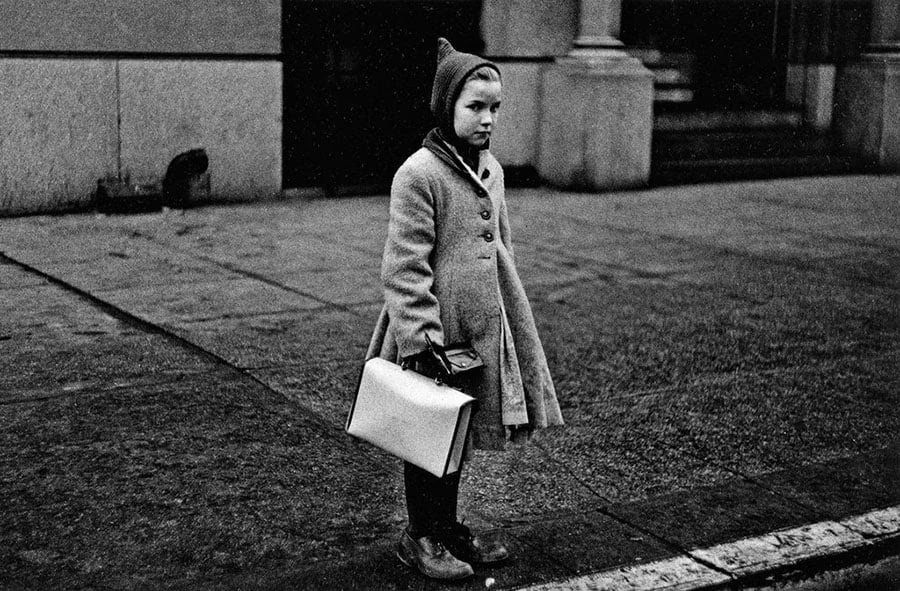
Diane Arbus captured New York City's marginalized communities in the 1950s and 1960s with a fearless, intimate lens. Her portraits of circus performers, transgender individuals, and people living on society's fringes challenged cultural norms and made her one of the most important documentary photographers of the 20th century.
Ansel Adams redefined landscape photography through his Zone System — a precise method of visualizing and controlling exposure and contrast before pressing the shutter. His black-and-white images of Yosemite and the American West remain among the most recognized photographs in history.
Henri Cartier-Bresson, the father of street photography, coined the term "the decisive moment." His philosophy — that photography is the simultaneous recognition of a fraction of a second's significance and the precise organization of forms — shaped generations of documentary photographers.
Dorothea Lange's "Migrant Mother" became the defining image of the Great Depression. Her work for the Farm Security Administration demonstrated photography's power to drive social awareness and policy change.
Robert Capa, the legendary war photographer, covered five conflicts and co-founded Magnum Photos. His blurred, chaotic D-Day landing images remain the most visceral visual record of that historic event.
Fashion and Portrait Icons
Richard Avedon stripped fashion photography of its stiffness. His minimalist white-backdrop portraits and dynamic fashion editorials for Harper's Bazaar and Vogue redefined how clothing and character could be captured on camera.
Annie Leibovitz became synonymous with celebrity portraiture through her work for Rolling Stone and Vanity Fair. Her meticulously staged, narrative-driven images — from John Lennon's final portrait to Hollywood's most iconic covers — blend fine art with pop culture.
Irving Penn brought a painter's precision to fashion and still life photography. His corner-portrait series, shot in a tight V-shaped studio corner, remains a masterclass in using constraint to fuel creativity.
Contemporary Visionaries
Gregory Colbert's "Ashes & Snow" series explores the poetic connection between humans and animals through large-scale, dreamlike imagery. His traveling museum — the Nomadic Museum — brought fine-art photography to global audiences in unprecedented ways.
Andreas Gursky holds the record for the most expensive photograph ever sold. His monumental, hyper-detailed compositions of architecture, landscapes, and mass gatherings blur the line between photography and contemporary painting.
Cindy Sherman uses herself as the subject, transforming into countless characters through costume, makeup, and setting. Her "Untitled Film Stills" series critiques female representation in media and remains a cornerstone of conceptual photography.
Steve McCurry's "Afghan Girl," with its piercing green eyes on the cover of National Geographic, became one of the most recognized photographs of all time. His work across Asia and the Middle East defines the power of photojournalism to humanize distant conflicts.
Sebastião Salgado spent decades documenting the human condition — from gold miners in Brazil to famine in the Sahel to his Genesis project, an eight-year photographic love letter to the planet's remaining wild spaces.
Practical Takeaways from the Masters
- Study one photographer deeply before moving to the next. Their body of work, philosophy, and technique are far more instructive than a single iconic image.
- Notice what they excluded. Avedon's white backgrounds, Lange's tight crops, Cartier-Bresson's absence of flash — what a photographer chooses to leave out defines their style.
- Read their own words. Many of these photographers wrote extensively about their process. Understanding their intent deepens your ability to apply their lessons.
Final Thoughts
Great photographers don't just take beautiful pictures — they change how the world sees itself. Whether it's Ansel Adams teaching us to see light, Diane Arbus demanding we see humanity, or Sebastião Salgado showing us what we're losing, their work transcends technique to become something universal.
FAQ
Who is considered the greatest portrait photographer of all time? Richard Avedon, Irving Penn, and Annie Leibovitz are frequently cited. Each redefined the genre in different eras, and "greatest" often depends on whether you value stark realism or narrative-driven staging.
What makes Ansel Adams' work so important? Adams combined technical mastery with profound artistic vision. His Zone System gave photographers precise control over exposure and contrast, while his environmental advocacy demonstrated photography's power to drive conservation.
Who is the most famous contemporary fine art photographer? Andreas Gursky is widely recognized as the most commercially successful and critically acclaimed contemporary fine-art photographer. His large-scale works regularly sell for millions at auction.