Portraits & Photo Ideas
5 Creative Ways to Capture Stunning Shots of Your Car
Car photography can be highly rewarding, but automotive subjects present unique challenges. Reflections off glossy paint, tricky body contours, and capturing...
Car photography can be highly rewarding, but automotive subjects present unique challenges. Reflections off glossy paint, tricky body contours, and capturing a sense of speed all require specialized techniques. Each car has a distinct visual personality, and finding the right styles and locations is what makes an automobile pop on camera.
Below are five creative styles of car photography to help build a diverse, professional automotive gallery.

1. Scenic and Lifestyle Car Photography
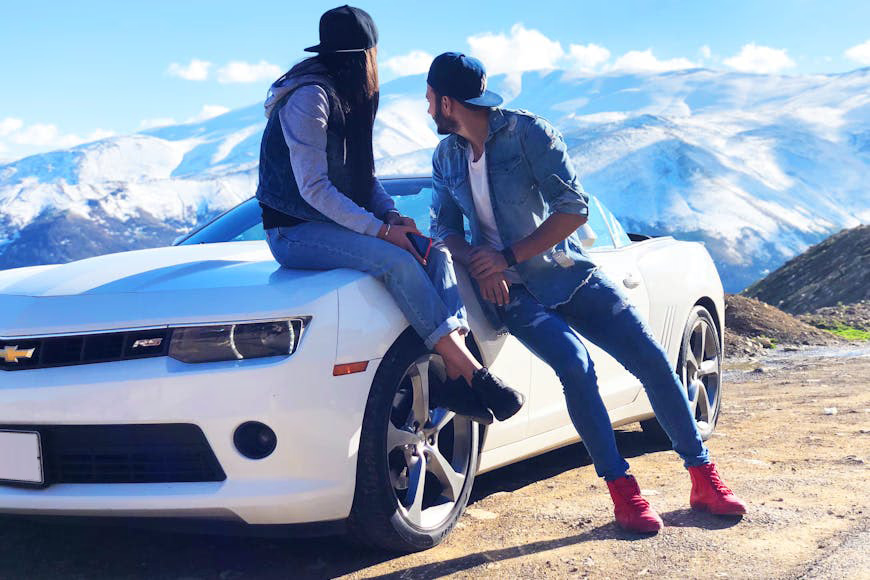
Scenic and lifestyle shots do more than show off a vehicle — they tell a story about where that car belongs. Placing an off-road truck on rocky, mountainous terrain, a vintage classic among historic architecture, or a high-performance sports car on an open city street places the car in its natural element and builds an aspirational lifestyle around it.
Key Equipment:
- Circular Polarizing Filter (CPL). This is the single most important tool for outdoor car photography. It cuts reflections on the windshield and wet paint, letting you see the actual lines of the car.
- A sturdy tripod. Essential for golden-hour, blue-hour, and low-light environmental shooting.
2. Dynamic Action and Motion Shots
Showing a car in motion adds kinetic energy that static shots can't replicate. There are two common ways to capture speed on camera:
- Panning. Stand in a fixed position as the car drives past. Use a slower shutter speed (1/30s to 1/60s), track the car smoothly with your lens, and shoot in burst mode. This keeps the car sharp while blurring the background and spinning the wheels.
- Tracking (Rolling) Shots. Shoot from a secondary vehicle driving parallel to the subject car at the same speed. This creates a highly professional, cinematic sense of motion.
3. Detail and Texture Macro Shots
Every car has unique design signatures — the curvature of a headlight, the weave of carbon-fiber trim, engine bay wiring, chrome logos, or stitching on the leather seats. Zooming in close with an 85mm or a dedicated macro lens isolates these details, telling a story of craftsmanship. Keep your depth of field shallow (around f/1.8 to f/2.8) to make these small components stand out cleanly.
4. Interior and Dashboard Framing
Capturing the cabin of a car requires careful exposure management, since interiors are dark compared to the world outside the windows. Shoot on an overcast day or use a subtle flash bounced off the headliner to fill shadows evenly. Highlight the steering wheel, stitching, digital displays, and gear selector. Framing the view through the windshield from the back seat can build a compelling perspective.
5. Light Painting and Night Photography
For a highly stylistic, dramatic look, shoot the car at night in a pitch-black location. Mount your camera on a tripod, select a long exposure (typically 15 to 30 seconds), and use a handheld LED light wand to "paint" light over the car's contours. This technique sculpts the vehicle's design lines precisely while keeping the background in deep silhouette.
Practical Tips for Automotive Shoots
- Wash the car thoroughly. Every speck of dust and fingerprint stands out under studio lighting or direct sunlight, adding hours of tedious clone-brush work in post.
- Watch your reflections. A glossy car functions like a giant curved mirror. Check the body lines to ensure you, your tripod, or surrounding light poles aren't reflecting awkwardly in the shot.
- Turn the wheels. Avoid shooting wheels completely straight. Turn them slightly away from the camera so the face of the wheel rim is visible in 3/4-angle shots.
- Shoot from low angles. Squatting down and shooting the car from headlight height makes the vehicle appear more aggressive, powerful, and larger-than-life.
Final Thoughts
Great car photography blends setting, motion, detail, and light to bring out a vehicle's unique personality. Experiment with panning to add energy, use a polarizing filter to control reflections, and shoot from a low angle to give your automotive portraits a commanding presence.
FAQ
Why do I need a polarizing filter (CPL) for car photography? A circular polarizing filter is essential for controlling reflections. By rotating the filter, you can cut glare off windshields and painted surfaces, revealing the car's color, lines, and interior details.
How do I make my panning shots sharper? Keep your shutter speed around 1/60s, track the vehicle's speed precisely while moving your body from the hips, and use continuous autofocus with high-speed burst mode. It takes practice — expect to shoot many frames to get a few perfectly sharp selections.
What is the best time of day to photograph cars? Golden hour (the hour after sunrise or before sunset) provides soft, warm, directional light that brings out car contours beautifully without creating the harsh, blown-out highlights common at midday.