Portraits & Photo Ideas
18 Contortionist Poses for Surreal Portraits
Contortionist photography is a mesmerizing genre that pushes the absolute boundaries of human flexibility, anatomy, and gravity. Images of a model bent into...
Contortionist photography is a mesmerizing genre that pushes the absolute boundaries of human flexibility, anatomy, and gravity. Images of a model bent into a graceful, near-impossible shape instantly seize a viewer's attention and force them to look closer. For creative photographers, working with a trained contortionist is a brilliant opportunity to showcase mastery of light, angles, composition, and dramatic style.
CRITICAL DISCLAIMER: Unless you are working with a professionally trained contortionist, circus artist, or highly advanced yoga practitioner, do not attempt to replicate these positions. What looks elegant and effortless in a finished portrait is the result of years of disciplined, safe physical training.

Striking Contortionist Poses to Inspire Your Portfolio
The Elbow Stand (Scorpion). The performer balances their entire body weight on their forearms while arching their spine backward, bringing their feet over their head toward their brow. From a composition standpoint, this pose creates a towering, symmetrical shape with incredible structural tension.
The Chest Stand (Chin Stand). The model lies face down on the chest and chin, arching their back upward so their legs fold forward over their shoulders, with their feet flat on the ground beside their face. This highly surreal angle is perfect for close-cropped, high-drama portraiture.
The Split Balance. Utilizing a platform, a chair, or flat ground, the contortionist performs a balanced over-split. This pose creates clean, elegant diagonal lines that divide the frame beautifully and draw the viewer's eye along the entire length of the limbs.
The Cradle (Pretzel). Sitting or balancing on the hips, the model folds their limbs around their torso in a tight, compact, and highly symmetrical shape. This pose works exceptionally well for abstract, low-key black-and-white portraits where shadows carve out the complex architecture of the body.
Professional Tips for Shooting Contortionist Portraits
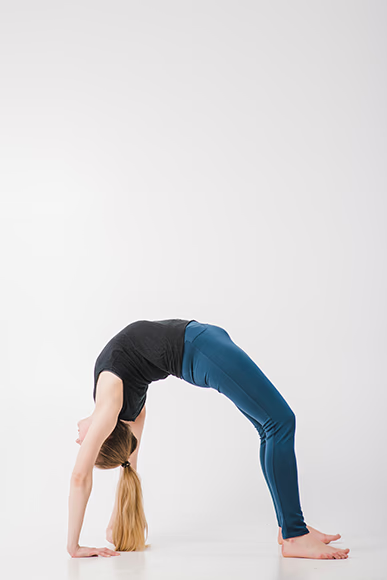
- Animate with clean, simple backgrounds. The architecture of the contortionist's body is the hero of the shot. A busy or cluttered background distracts from the lines of the pose. Opt for clean, solid studio backdrops or open, dramatic natural landscapes.
- Use harsh, directional light. Low-key, high-contrast, or directional side lighting is brilliant for sculpting. It carves out deep shadows and striking highlights along muscles, ribs, and lines, exaggerating the structural form of the pose.
- Shoot from low angles. Squatting down and looking upward makes structural shapes appear larger-than-life, powerful, and deeply dramatic. Experiment with 360-degree framing to find the angle where the pose looks most surreal.
- Communicate constantly. These poses are physically demanding. Never make your subject hold a difficult position for long. Pre-frame your shot with a stand-in, and have your settings locked before directing your model into position.
Final Thoughts
Contortionist photography is a collaborative celebration of physical capability and creative visual staging. By utilizing clean backdrops, dramatic directional light, and careful low-angle framing, you can capture stunning, gravity-defying portraits that showcase both your technical prowess and your subject's incredible artistry.
FAQ
Do I need specialized equipment to photograph contortionists? No. A standard portrait lens (typically 50mm, 85mm, or 105mm) paired with a fast shutter speed to prevent motion blur is all you need. A sturdy tripod is helpful if you are shooting with complex, long-exposure light painting setups.
How do I safely direct a contortionist during a shoot? Never push them beyond their comfort zone. Ask them what poses they are currently warm-up ready to do, respect their physical limits, and let them guide the movement. Your role is to capture the shape they choose, not force a position.
What lighting works best for displaying physical flexibility? High-contrast side-lighting (chiaroscuro) or Rembrandt lighting works exceptionally well. By casting deep shadows across the contours of the body, it highlights anatomical structure and exaggerates the curves of the pose.