Editing & Workflow
AI HDR and Flambient Merge Software for Real Estate Photography
Real estate photography may not be the most creatively complex genre, but it is one of the most technically demanding. Agents and clients expect bright inter...
Real estate photography may not be the most creatively complex genre, but it is one of the most technically demanding. Agents and clients expect bright interiors, accurate colors, perfectly straight verticals, balanced lighting, and a clear view through every window — across dozens of images that all need to look like they belong to the same listing. Hitting that bar consistently used to mean hours behind a screen for every shoot.
Today, AI-driven HDR and flambient merge tools are doing a remarkable job of automating the most repetitive parts of that workflow, freeing photographers to spend more time shooting and less time masking windows in Photoshop.

The Traditional HDR and Flambient Workflow
Most real estate photographers rely on one of two techniques to handle the brutal lighting contrast of an interior:
- HDR (High Dynamic Range): Shoot multiple bracketed exposures of the same scene and merge them so highlights (the windows) and shadows (the dark corners) both retain detail. Done well, the result looks natural and balanced. Done across an entire property, it eats hours.
- Flambient: Combine flash and ambient exposures to lock down accurate color and clean lighting, especially under mixed sources like tungsten lamps and daylight from windows. Excellent results, but the manual masking and blending in Photoshop is slow.
Both approaches work. Both are time-intensive. For photographers shooting two or three properties a day, post-production becomes the bottleneck.
How AI Is Changing Real Estate Editing
Recent software automates many of the steps that used to need manual labor:
Automated HDR merging. Upload your bracketed sequence and the software blends them into a balanced image, retaining shadow and highlight detail without the heavy, over-processed look that early HDR tools were known for.
Window recovery. This used to be the most tedious part of an interior edit. Modern tools detect the window region automatically, pull detail from the darker exposures, and blend it cleanly with the brighter interior — no brush work required.
Sky replacement. For exteriors with blown-out or dull skies, AI can detect the sky and swap in a new one while matching the scene's lighting, reflections, and color temperature.
Perspective correction. AI analyzes the architectural lines in the frame and straightens verticals automatically, so rooms feel solid and stable instead of leaning or barreling.
Color and white-balance consistency. Mixed lighting throws white balance off in nearly every interior. AI tools detect dominant light sources and unify color across rooms so the whole listing feels coherent.
None of this replaces a photographer's eye, but it removes the repetitive technical work and dramatically shortens turnaround.
Why Style Consistency Matters in Real Estate
A listing should feel like one cohesive presentation. If the kitchen looks warm and golden but the master bedroom skews cool blue, the property feels disjointed even before a buyer realizes why. Traditionally, achieving consistency meant carefully copying settings between images and double-checking each room.
This is where systems like Imagen take a different approach. Rather than rely on fixed presets, Imagen analyzes thousands of images you've already edited and builds a Personal AI Profile that learns how _you_ adjust exposure, white balance, contrast, and color. Once trained, it applies the same decisions to new shoots automatically.
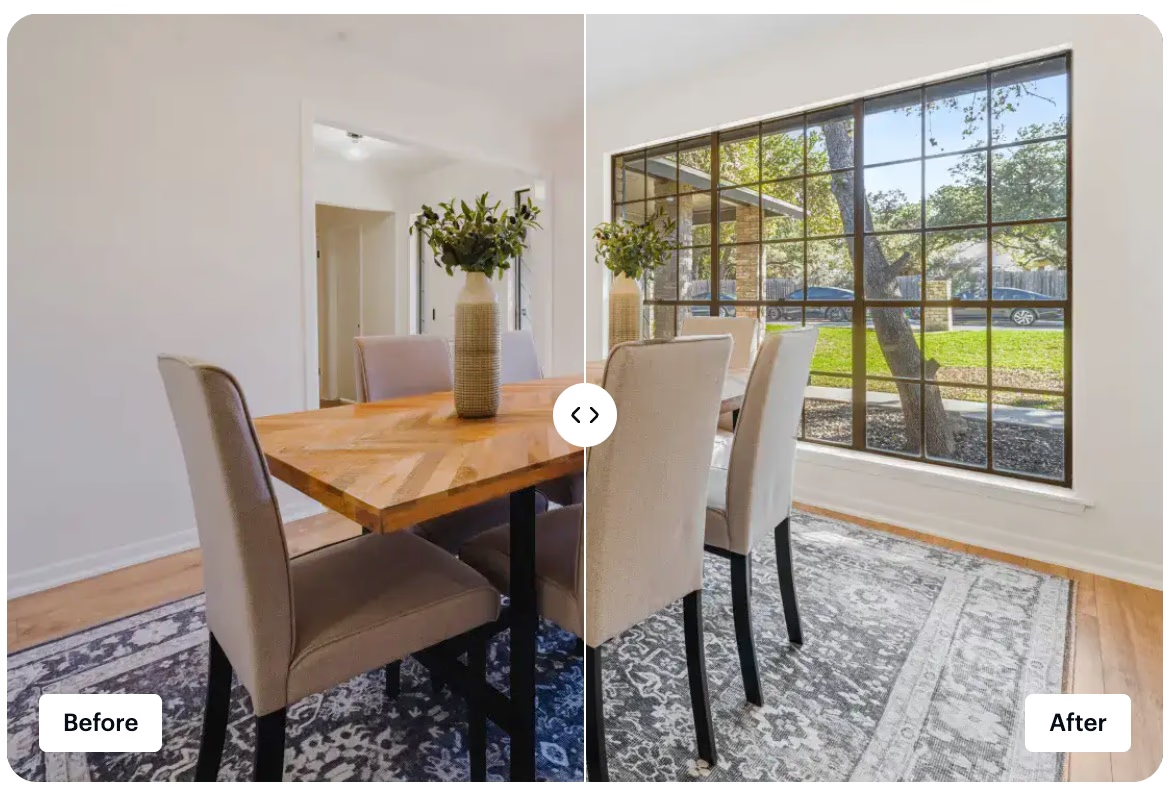
For real estate work specifically, that means consistent tone across an entire property even when lighting changes from room to room — and a finished gallery that looks like the photographer's signature style, not a generic preset.
Where AI Editing Tools Genuinely Save Time
- High-volume days. Three properties in one day used to mean a long evening of editing. AI cuts that to a fraction of the time.
- Multi-photographer teams. Studios with several shooters can apply a unified profile so every photographer's output looks like the same brand.
- Quick turnaround listings. Hot markets need photos delivered same-day. Automation makes that realistic.
- MLS-ready batches. Vertical correction, color matching, and window recovery applied automatically across an entire shoot.
What AI Won't Do for You
- Compose the shot. Framing, height, and angle are still on you.
- Stage the room. AI can clean clutter cosmetically, but tidy spaces shoot better than messy ones.
- Replace your judgment. Always review the final delivery — automation occasionally misses on tricky scenes.
- Handle every flambient setup perfectly. Complex mixed-light scenes still benefit from a manual pass.
Practical Tips for Real Estate Photographers
- Shoot consistent brackets — typically 3 to 5 stops apart — so the merge tool has clean data to work with.
- Use a sturdy tripod and a remote release; aligned brackets produce better AI merges.
- Lock white balance manually rather than letting it drift between exposures.
- Keep your camera level using a built-in level or a hot-shoe bubble to make perspective correction easier.
- Train your AI profile on your best work, not your rushed work — the system learns whatever you feed it.
- Spot-check final exports at 100% before sending to clients; AI is great, but not infallible.
Final Thoughts
Real estate photography rewards consistency, speed, and clean technical execution. AI HDR and flambient tools deliver all three by handling the repetitive parts of post-production that used to define this workflow. They don't replace the craft of choosing angles, lighting a space, or styling a room — but they do let you spend more of your time on the work that actually moves the needle, and less on masking window frames at midnight.
FAQ
Is AI editing as good as manual HDR or flambient blending? For the majority of real estate work, yes. Skilled photographers still produce slightly cleaner results manually on complex scenes, but for everyday listings, modern AI tools deliver professional output far faster.
Will an AI editor learn my personal style? Some tools, like Imagen, build a profile from your previous edits and apply your decisions to new images automatically. Others rely on shared presets and per-image adjustments. The profile-based approach scales much better if you shoot regularly.
Do I still need to shoot bracketed exposures? Usually yes. AI merge tools work best when you give them a properly exposed sequence — typically three to five frames covering shadows, midtones, and highlights. The output quality depends on the input quality.
Can AI replace a real estate photographer? No. AI handles editing efficiently but can't compose, light, stage, or read a property. Photography remains a skilled trade; AI is a force multiplier.
How long does AI real estate editing actually save? Many photographers report cutting per-property edit time by 60–80%, and complete galleries that previously took an evening can often be delivered the same day. The biggest gains are on window recovery, vertical correction, and color consistency across rooms.