AI & Creative Tech
How to Copyright Your Photos and Prevent Image Theft
For professional photographers and creative hobbyists, protecting your intellectual property is essential. The moment you press the shutter button, copyright...
For professional photographers and creative hobbyists, protecting your intellectual property is essential. The moment you press the shutter button, copyright law grants you automatic ownership of that image. But in the digital age — where photos are easily downloaded, scraped by AI models, or screenshots are shared across the web — knowing how to enforce and register your rights is crucial.
This guide will break down the fundamentals of copyright, explain how to register your images, and highlight free ways to protect your work online.

What Is Image Copyright?
Copyright refers to the intellectual property rights of an author over their original creation in a tangible form. It's important to note that an idea for a photo cannot be copyrighted — only the actual, physical photograph you produce with that idea is protected. To qualify for copyright protection, an image must meet three criteria:
- It must be original (not a direct copy of someone else's work).
- It must contain a degree of creativity.
- It must exist in a tangible medium (saved on a memory card, hard drive, or film negative).
Your ownership rights start immediately from the moment of capture, regardless of whether you display a copyright symbol (©) or register the file with a government body.
Why You Should Officially Register Your Copyright
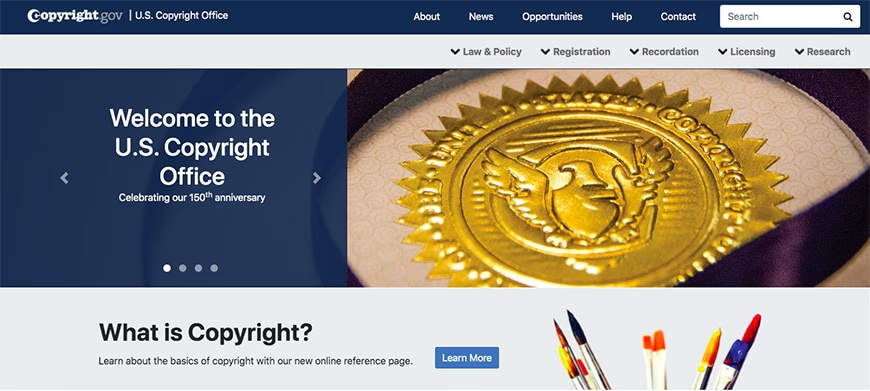
While automatic copyright is great, officially registering your images with your country's copyright office (such as the US Copyright Office) grants significant legal advantages. If someone infringes upon your registered work, you are entitled to ask for statutory damages and attorney's fees. If your work is unregistered, you can typically only sue for actual lost profits — which are often difficult to prove and can be less than the court fees themselves.
Registering your images in bulk batches (e.g., quarterly) is a cost-effective way to protect large catalogs of commercial work.
Free and Simple Ways to Deter Image Theft
Officially registering images costs money, but there are several highly effective, free practices you can start using today:
Use visible watermark signatures. While watermarks can be cropped or edited out, having a clean, elegant watermark (e.g., "© [Year] [Your Name]") informs casual users that the image is protected and prevents "accidental" sharing.
Embed metadata. Tools like Adobe Lightroom, Bridge, and Capture One let you embed copyright information, contact details, and usage terms directly into the metadata of every JPEG or RAW file during import.
Adopt the C2PA standard. Support the Content Authenticity Initiative by using C2PA-compatible tools. This adds tamper-evident cryptographic metadata to your files, proving you are the original creator of that photo.
Publish lower-resolution JPEGs. Avoid uploading full-resolution, high-quality files to social media or your public website. Restricting your displayed images to 72 dpi with a maximum width of 1080px or 1200px makes them virtually useless for large-scale print theft.
What to Do If Your Image Is Stolen
If you discover that an individual, brand, or website is using your copyrighted image without permission:
- Take screenshots. Document the infringement immediately, making sure to capture the date, the URL, and how your image is being used.
- Send a Cease and Desist letter. This polite but firm letter requests that the user take the image down or pay an appropriate licensing fee for their usage.
- Submit a DMCA Takedown Notice. Under the Digital Millennium Copyright Act (DMCA), you can send a formal request to the host of the website (or the social media platform) to have the infringing material removed immediately.
Final Thoughts
Your photographs represent your time, skill, and creative energy. While preventing all online theft is nearly impossible, establishing healthy habits — embedding metadata, displaying watermarks, publishing small JPEGs, and officially registering your commercial work — puts you in a position of power to protect your catalog.
FAQ
Do I need a copyright symbol (©) to protect my photos? No. Copyright is established automatically from the moment you press the shutter button. However, displaying the copyright symbol serves as a helpful visual warning to deter potential theft.
What is a DMCA takedown notice? A DMCA notice is a formal request sent to a website host or social platform to remove copyrighted content that has been posted without the creator's permission. Most reputable hosts act on these requests quickly to avoid liability.
Can AI-generated images be copyrighted? Currently, copyright laws in many jurisdictions (such as the US) state that only works created by human authors can qualify for copyright protection. Images generated entirely by AI models generally do not receive copyright ownership.